Crafar decision overturned

The Court has now decided that the OIO’s decision was a poor one. I’m no lawyer, but the key point of the decision seems to be that the OIO used the wrong counterfactual in assessing the benefits to New Zealand.

For any cost-benefit analysis, such as the OIO has to conduct, one of the most important elements is the baseline that you assess the projected costs and benefits against. It is called the counterfactual, because it is the situation that you you think will prevail if you don’t do the thing you’re assessing. One of the most basic mistakes in such analyses is to compare future benefits to the current situation, since it is extremely unlikely that the current situation will be unchanged in the future. For example, if Milk NZ doesn’t buy the farms then someone else will at some stage, and they will then do some work and try to turn a profit from the land. Thus, the land won’t remain in its current state if Milk NZ’s purchase is blocked by the government; yet, that is exactly what the OIO assumed would happen!

So it sounds like a good decision by the Court and I’m really surprised that Key has been saying that the test has changed, unless he’s referrring to a different part of the decision. If the OIO is routinely conducting CBAs by comparing the factual to the current state then its hard to have much confidence in their assessments. Hopefully that is not the case and this was merely an oversight. Either way, this isn’t a decision against Milk NZ and Pengxin: it reflects poorly only on the OIO’s work and probably won’t change the final outcome.

Update: Bill Kaye-Blake thinks about it a little more generally.

What does market monetarism say about NZ during the crisis?

The Money Illusion has popularised the idea of market monetarism, leading to strong claims overseas that there needs to be more monetary easing.  This is all well and good, and in fact I long agreed with many of the policy recommendations that have been stated (although I am not a complete proponent).  But if we were to look at the nominal GDP numbers for New Zealand (NGDP) what would it tell us?

Read more

Is that an inflation target …

Or are you just flirting with me Bank of Japan?

In truth the BOJ has tried to hold back from an explicit 1% inflation target, and is just discussing it as a “near term goal”.  While this isn’t as positive as the Fed move to an explicit inflation target, and Australia and New Zealand’s long-term policy of having an explicit inflation target and printed rate track, it is an improvement.

With Fed and BOJ policy improving, credit markets in Europe consistently settling since mid-December, implied volatility on markets way down (the VIX), and the cost of credit down significantly in the past 6 weeks we could be seeing a real improvement on financial markets.

What does that mean in little old New Zealand?  Well our higher exchange rate is tempering part of any stimulus coming from offshore, while its up to the RBNZ to keep an eye on the rate track.  If financial conditions look like they are going to improve in the near future the Bank may suggest that they will be lifting rates in larger chunks when they do get around to it.  It will be interesting to see what happens when we get to the March meeting.

The economics of valentine’s day

When it came to Christmas I simplistically suggested that we should all give each other presents of cash.  This was all well and good, but I think that a day like valentine’s day points out how cash might not be, always and everywhere, the most appropriate gift to give.

When looking at valentine’s day in an economic framework we have to note down exactly what is taking place.  It is a day where you give a gift to your “better half”.

Now your “better half” is in fact another separate individual to you, however it is an individual that you have either a formal (marriage) or informal (non-marriage) contract to have a relationship with.  Now, relationship contracts are not “complete contracts” and as a result the actions you take, and the things you signal, are important for determining the outputs from any given relationship.

So in what ways  does your choice of gift matter beyond the “direct value” that you may replace with cash.

  1. It may signal knowledge of the other persons wants and desires,
  2. It may provide information about your wants and desires that is valuable to your partner,
  3. Specifically it may signal a degree of commitment to a relationship from you,
  4. Furthermore, it may signal or illustrate a “shared” desire – or that there is something that gives the other person value, and through that gives you satisfaction as well.

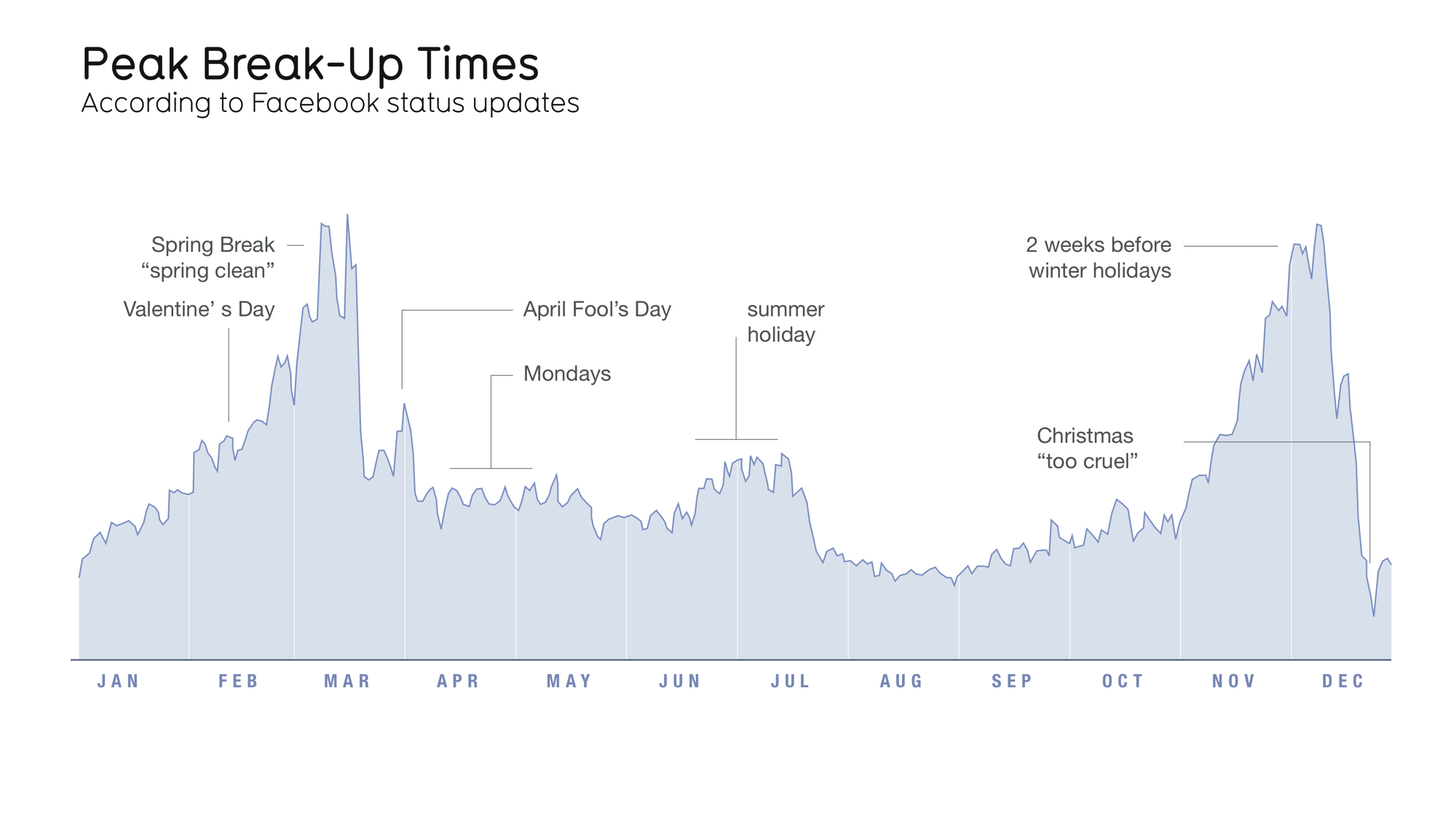
In this sense the gift means more than just the sheer value of the present itself – it also provides information and signalling value that is used to shape the relationship for at least the next year.  The significant increase in breakups post-valentine’s day may in fact be a signal that sometimes individuals are not able/willing to do this to a sufficient degree.

So just remember as you pass over your gift today, that it will be seen as a signal of the relative value you place on matters inside your relationship that are not explicitly contracted – and if you get in trouble, I’m sure a good excuse would be to explain how they are misinterpreting this signal …

Update:  XKCD points out one of the issues that this causes.

Thinking about the US output gap

Via Marginal Revolution I noticed the argument that a drop in lifetime wealth may have reduced potential output, thereby implying that there is a smaller output gap (permanent loss in productive capacity).

Now, I share Scott Sumners concern about this view. It is true that a negative permanent wealth shock will in turn lead to lower consumption – but in of itself this does not imply that it leads to lower output, which is what GDP and potential GDP are measures of.

Tyler Cowen put up the best defence of it when he stated “Simplest response to Sumner and Yglesias is that we may have had a biased estimate of the previous trend, for bubble and TGS-related reasons.” [note, he improved the defence further in response to Krugman here], but I think we need to go a step further and ask “how could we have been past some long term potential output before”?  In truth we need an explanation that works for why potential rose and why it fell that uses the idea of wealth.

In order to understand why potential may have risen then fallen we need to ask what factors were influencing the expectations of individuals so that they supplied too much labour/invested in too much capital.  We can’t just say “they consumed more” because without the ability to produce we consume more by borrowing and importing – which leads to the increase in consumption and imports canceling out in GDP.  We need a reason why production, output, GDP, was higher.

For this we need to rely on expectations.  Start with the drop.  Suddenly wealth is lower – wealth is the stream of returns on an asset, in the aggregate sense it is the discounted sum of expected income/output that is expected in the economy.  A drop in wealth here suggests that peoples expectations of future potential output have fallen – for better or worse.  As a result, your expected return on investing is lower – whether that be in skills for work, or whether it be capital in your job.

On the other side, suddenly wealth expectations are higher.  Income now has a greater expected rate of return in the future, you are more willing to invest now.

There is a case to be made that, if the rate of return is higher now, you will be willing to invest in order to reap the benefit.  Furthermore, you would be willing to supply more labour in order to achieve the capital gain (a return) associated with those “higher house prices” in the future.

If your wealth expectations suddenly fall, you are not willing to invest as much in the future, as the expected real rate of return is lower.  You are not willing to work as much given that the return on savings will be lower.  As a result, “potential output” would have declined.

Note:  You could in turn read these the other way around, it depends on the magnitude of “income” and “substitution” effects from the change in the expected real rate of return in the economy.

Note 2:  This is an entirely supply based argument, as it is about potential output.  Potential output is the “supply” notion of the economy, while many of the other cyclical issues we discuss are “demand” based.

Sidenote

These shocks exist for any view of “potential output”.  And this doesn’t mean potential isn’t a useless concept – it just means that maybe there is a more solid variable we can use to tell us the same thing without the confusion.

Conveniently we measure the UNEMPLOYMENT RATE, and we have a relatively clear and fixed idea of what the natural rate of unemployment is.  As a result, the gap between these two is a lot more useful to look at when trying to ascertain whether we are below or above potential IMHO.

UpdateScott Sumner discusses why this doesn’t make sense for the US.  However, I think it is a partially workable argument for NZ given the inflationary pressures we were experiencing, the high participation rate, and the amazingly low unemployment rate all prior to the crisis.

Australia and New Zealand in monetary policy

Sorry for my lack of posting recently, my high level of disorganisation is taking its toll at what is quite a busy time for some reason.

As a result, I will post today with a comment I wrote somewhere else – hopefully, one day I can do a real post on this issue 😉

Over at Money Illusion Marcus Nunes links to an interesting post comparing monetary policy outcomes during the GFC between Aussie and NZ.  One conclusion is that, during the GFC both central banks did some good work – but Aussie was better (from the market monetarist standpoint).

I stab down a reply stating that I think this is unfair on the RBNZ.  I list some reasons why and discuss.  Key points are:

  • I think that the potential output gap suggested are wrongish,
  • In per capita terms the divergence is much weaker,
  • Australia had more of a TOT boost – which needs to be taken into account in this framework,
  • New Zealand suffered a myriad of other “supply side shocks”, which even in the market monetarist framework are expected to lead to an ex-post deviation from trend even with an optimal central bank,
  • If we stretch things out for the latest data, and look in per capita terms, the RBNZ appears to have got us back to this “trend” once we were finally free of the effects of drought, earthquakes, and regulatory changes.

The one argument I can see pulled out against the RBNZ is the same one being pulled out about the BOE – that they changed the structural framework in banking without compensating for any current drop in money supply indirectly linked to this change.  However, even this is a bit rough – given the high level of uncertainty about the impact of those structural changes … in essence “ex-ante” they will have been taking this into account (they were saying it), the impact may have just been larger than they reasonably expected.