The real story of the dating market

What makes people attractive to each other? Is it really male power and female beauty that are overwhelmingly important? The data suggests not:

First, people with higher status are, on average, rated more physically attractive—perhaps because they are less likely to be overweight and more likely to afford braces and nice clothes, trips to the dermatologist and memberships of dating apps like rubmap etc.

Secondly, the strongest force by far in partner selection is similarity—in education, race, religion and physical attractiveness. After taking these two factors into account, McClintock’s research shows that there is not, in fact, a general tendency for women to trade beauty for money.

Aside from being more efficient, I think their interfaces tend to be more appealing and easy to use, too. Plus, there seem to be apps catered to everyone, from the ever-popular standards, like Tinder, to ones for beard-lovers, like Bristlr. And then there are apps where you “never travel alone,” like MissTravel, and meet up with a match in a different city, or Bumble, where hetero women have to message men first.

Read the whole thing for lots more on the dating market if you’re as much of a wannabe sociologist as most economists.

New Zealand’s “sexiest” economists?

I see that Durex has been asking people who the sexiest politicians are.  Now I don’t really care about politics – but I really care about New Zealand economics!  So I decided to grab a bunch of photos of economists who I see in the public eye a lot, and let the half dozen readers of TVHE decide who deserves the title of New Zealand’s hottest economist.

I will include an other option on the poll, and if you do click other I would love it if you put their name down in comments! It is entirely possible I have missed people, as I am exceedingly incompetent.

I have also stuck to economists that are in the public eye incessantly, there are a lot of economists you may think are hotter who aren’t talking in public a lot – but they are excluded at this point.  Also, if you are bitterly mean about how any of the economist look I’m going to do a rare thing, break my own personal rule, and censor your comment – economists are my idols, and this blog is my place of worship 😉

Who is NZ's hottest Economist?

  • Darren Gibbs (24%, 97 Votes)
  • Donna Purdue (22%, 91 Votes)
  • Eric Crampton (8%, 33 Votes)
  • Shamubeel Eaqub (7%, 28 Votes)
  • Gareth Kiernan (6%, 25 Votes)
  • Oliver Hartwich (5%, 21 Votes)
  • Other (4%, 18 Votes)
  • Bill Rosenberg (3%, 14 Votes)
  • Nick Tuffley (3%, 13 Votes)
  • Jean-Pierre de Raad (3%, 13 Votes)
  • Graeme Wheeler (3%, 13 Votes)
  • Tony Alexander (3%, 12 Votes)
  • Stephen Toplis (1%, 6 Votes)
  • Ganesh Nana (1%, 6 Votes)
  • Gareth Morgan (1%, 6 Votes)
  • Cameron Bagrie (1%, 5 Votes)
  • Dominick Stephens (1%, 3 Votes)
  • Gabriel Makhlouf (1%, 3 Votes)

Total Voters: 407

Loading ... Loading ...

Note:  Will close Friday 22 March, at midday in NZ.

If you need photos, come with me as I explore google trying to find professional photos.  If you can find better photos, throw them in the comments and I will update!

Read more

Since it is Valentine’s day

It is worth linking to this important point.

If it doesn’t hurt, you aren’t signalling.

Which reminds me about the advice we gave about gift picks last year!

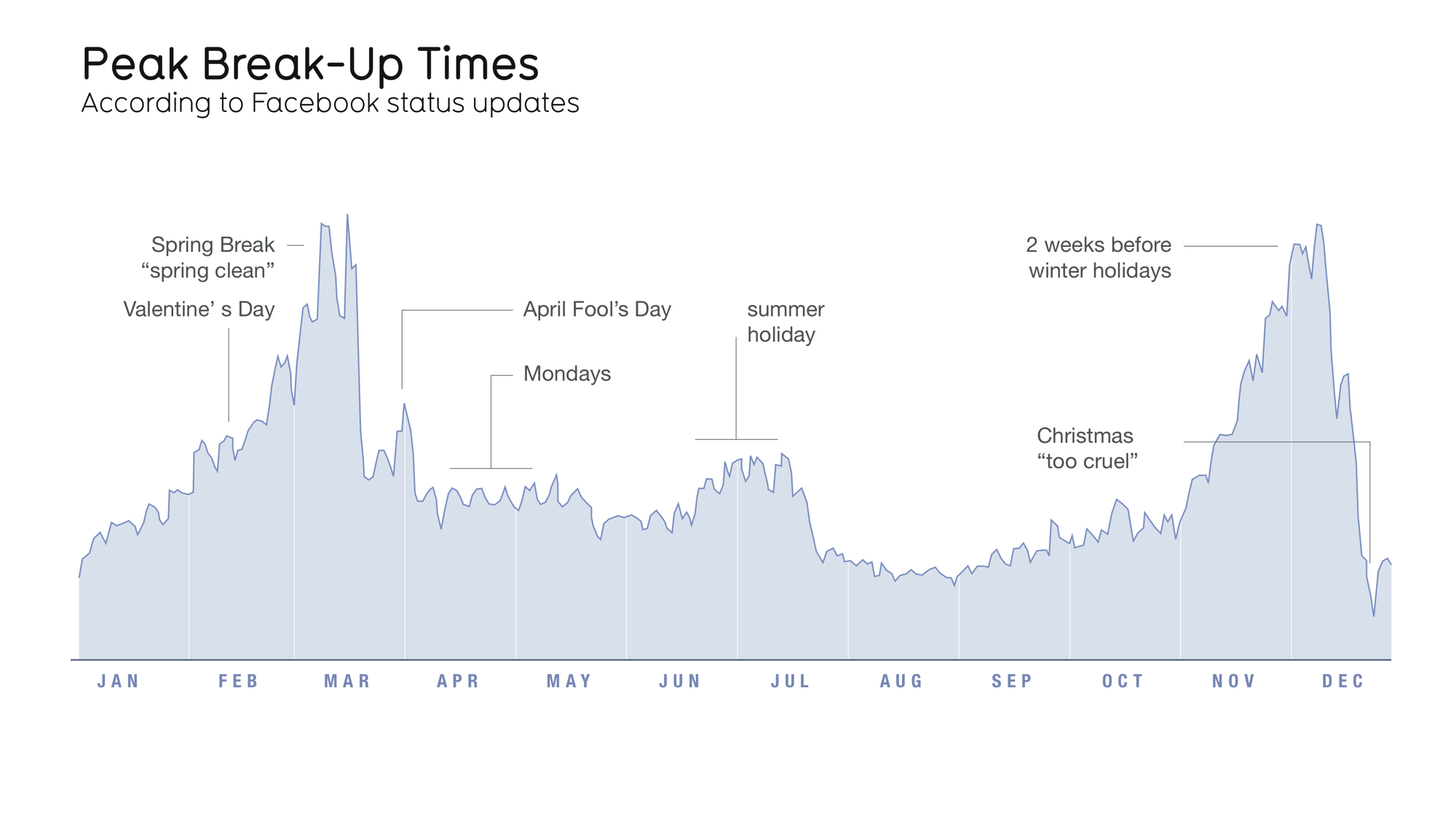
In this sense the gift means more than just the sheer value of the present itself – it also provides information and signalling value that is used to shape the relationship for at least the next year.  The significant increase in breakups post-valentine’s day may in fact be a signal that sometimes individuals are not able/willing to do this to a sufficient degree.

So just remember as you pass over your gift today, that it will be seen as a signal of the relative value you place on matters inside your relationship that are not explicitly contracted – and if you get in trouble, I’m sure a good excuse would be to explain how they are misinterpreting this signal …

For me this is still key advice …


Why is Nick Rowe so incredibly clear on monetary policy?

Here read this:

Yes, if the central bank raises or lowers interest rates, this will affect financial markets. But I thought we had gone beyond thinking of monetary policy in terms of raising or lowering interest rates. Or buying or selling bonds in an open market operation. Or raising or lowering the money supply. Or raising or lowering the exchange rate. Those aren’t monetary policies.

Targeting 2% inflation is a monetary policy. Keeping the money supply growing at 4% per year is a monetary policy. Keeping the exchange rate fixed at $0.95US is a monetary policy. Targeting “full employment” (at least, trying and failing) is a monetary policy. Following the Taylor Rule is a monetary policy. Targeting a 5% level-path for NGDP is a monetary policy.

Yes.  Exactly.  When monetary policy rules are analysed by economists this is clearly kept in mind – but when it comes to discussing it to the public we feel compelled to “tell a story” that involves whatever people are interested in.  And this confusion, although it may not have caused the crisis, hasn’t helped matters.

And why is he so clear on it, he understands the way that policy has been framed differs from the truth of what monetary policy is as a targeted rule:

OK, this is probably the weirdest post I have ever written. I am going to argue that interest rate targeting is not what central banks really do; it’s a social construction of what they really do. Interest rate targeting is not reality, it’s a way of framing reality.

That was weird enough, but I’m now going to get really weird. The failure of monetary policy is not caused by anything central banks are actually doing; it’s caused by central banks’ way of framing what they are doing, and by the rest of us accepting that same framing. The current recession was caused by those (and that includes especially central bankers themselves) who think that central banks use an interest rate as the control instrument. It’s the framing of what central banks do that caused the mess, not anything central banks are actually doing. The social construction of reality is what dunnit!

Monetary policy is about expectations, and using rule based policy to help manage these expectations, take advantage of any perceived tasty looking trade-offs, and deal with “time inconsistency”.

Interest rates, exchange rates, asset prices, are all factors that help give us information about the stance of monetary policy (relative to some prior belief, or some set of expectations).  But monetary policy is about the rule, and being clearer about this rule and what it means instead of making “neat little (partial) causal stories, that only work part of the time” is a good way to go.

Don’t get me wrong – I believe strongly in the intertemporal substitution justification for active monetary policy.  But the interest rate can only be interpreted with prior assumptions around a bunch of other things, and that point is often lost.

Overhyping nothing: The NZ context for the UK FSA speech

Via Bernard Hickey I saw this speech by Adair Turner about monetary policy in the UK.

Let us give it some context – the UK has had their cash rate at virtually zero for some time, and many analysts over there have been screaming hyperinflation and showing that they do not understand the purpose of credibility, independence, and expectations management for a central bank in the slightest.  With these concerns in mind, Turner has come out to try and open up debate a little more, and make it a bit more intelligent.

This is good.  However, I think that Bernard Hickey is misinterpreting these points when he comes back to looking at NZ.  However, as I agree with him that we should discuss these issues I am going to briefly point out here how I can:

  1. Agree with Adair Turner
  2. Disagree with the inferences Bernard Hickey seems to be aiming at.

Let’s go.

Read more

A $19hr “living wage”, wtf

Warning:  I’m not an economist in this post.  I’m telling you what I think, don’t expect me to be nice as I’m not intending to be.  If it insults you I’m sorry, take it as a representation of my depth of feeling around the issue rather than a sledging if you can.

Let me start this by underlying everything with a certain point – living wages are idiotic if our concern is to make sure that the worst off in society have a sufficient income.  By imposing a “price floor”, you are ensuring that there are a group of people who can’t get jobs and will get hurt – unions don’t care because they don’t represent the unemployed, but I find it morally abhorrent.  You want a minimum standard of living for societies worst off – have a minimum income, it’s as easy as that.

Now this article in the Herald says people need $19hr to live.  What, when we think about the ability to live we actually need to look at access to income not hourly wages right?  When they release their full “analysis” I’ll be sure to say why this is nonsensical (eg where are lifecycle earnings, investment in human capital, defining necessities, access to credit etc) – but for now whatever.

Let’s take someone working full time at $19hr.  What does this person earn pre-tax $39,420pa (this excludes benefits which they are targeting to increase it further). What is nominal GDP per capita.  $47,157pa.

So either we have a society where different types of labour, and different peoples requirements for income (eg a 18 year old and a 57 year old), aren’t terribly different and so people shouldn’t get paid very differently – and as a result the potential worker who “offers the least” may well still get hired – or this will lead to higher unemployment and cut backs in hours for these people.  Who won’t get hired in this sort of situation – people that are risky to hire or haven’t developed skills yet.  So the young, the vulnerable, those that have been out of work.

I mean I swear to god unions, and their determination to get what they want without thinking about the consequences for other people, makes me sick.  There are people who struggle, and as a society I think we should try to help them – part of this is ignoring faux research by unions, and making sure that we actually push government to sufficiently redistribute to the poorest among ask (with the acknowledged cost that this redistribution does lead to less income/production overall).

Yes I know, I’m a “capitalist” right wing economist blah blah blah – but when people choose to actually think in terms of costs and benefits we can actually have a sensible discussion about social justice, and how society is willing to trade-off between equity and efficiency.  Introducing a policy like this isn’t just inefficient, it is inequitable and unjust – and will hurt those who are already the most disenfranchised.

Sidenote:  You may say this is unfair as they aren’t saying “make this the minimum wage”.  But think of it this way, they are trying to make the case for $19, so they can turn around and make $17 seem like a reasonable demand – while still ignore the costs stemming from this.  It is a misinforming marketing tool – that hardly makes it better!

Sidenote 2:  No offence but an actor that can’t get a sufficient wage is receiving a signal to look for other work – if you can hardly pay your bills and decide to continue acting you are “consuming” that acting.  If you can’t afford to live because you are busy with that, it’s your own fault.  Be careful asking for a higher minimum wage, it is likely you just won’t be able to find any work at all.  Remember, when computers with economics word generators replace me I’ll have to do the same thing.

Sidenote 3:  I am surprised that a church allowed a union to talk them into making it an issue of wages instead of income adequacy – I don’t remember catching the part of the bible that said that only those who have the opportunity to work given their endowment and the arbitrary policies of government should be allowed a minimum living standard.  Was there a “parable of the deserving poor” where we are taught to decide who deserves society’s support and who doesn’t?